
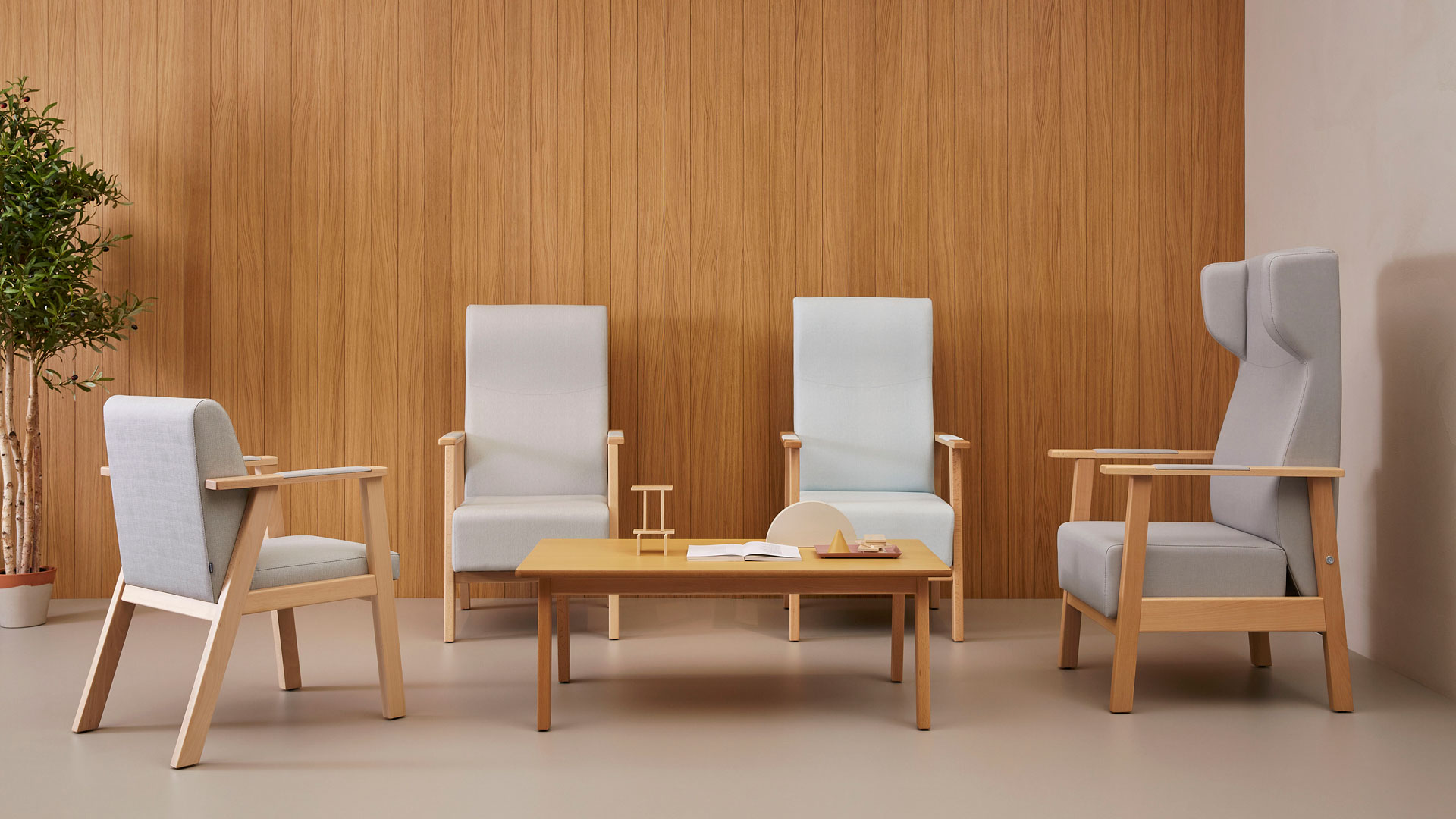
Intergenerational spaces: designing for living together
According to Spain’s National Statistics Institute, people aged over 64 already account for 20.7% of the Spanish population and, if current trends continue, this figure could exceed 30% by 2076. Faced with this demographic shift, one question arises: are our spaces ready for an increasingly long-lived society? Intergenerational spaces offer a different app

How the environment makes a difference during summer
Summer changes our schedules, our routines and the way we use spaces. The days are longer, we spend more time outdoors and look for moments of rest, conversation and relaxation. In care homes, healthcare and social care facilities, and at home, adapting the environment to this time of year can help older people enjoy greater […]

CALA wins the RED DOT AWARD 2026
A recognition of design that enhances the experience of care environments. CALA has been awarded the Red Dot Award 2026, one of the most prestigious international distinctions in the field of design. This award highlights a collection conceived to respond to the real needs of care environments, combining functionality, ergonomics and warmth. Developed by Ale

WAVE receives the ADCV positive impact award 2026
Este reconocimiento destaca aquellos proyectos capaces de generar una mejora real en la vida de las personas. Y precisamente ese fue el punto de partida de WAVE: diseñar mobiliario que sitúe las necesidades de las personas mayores en el centro. A través de soluciones que favorecen la autonomía, mejoran la seguridad y fomentan la interacción social, [&h

What can neuroarchitecture teach us about spaces designed for older adults?
Hay espacios que generan calma casi de forma inmediata. Y otros que producen cansancio, desorientación o incomodidad sin que sepamos exactamente por qué. Aunque muchas veces pase desapercibido, el cerebro analiza constantemente el entorno que nos rodea: cómo nos movemos, qué tan fácil resulta orientarse o incluso si un espacio transmite seguridad. La ne

Furniture Trends for Care Environments
El diseño de los espacios de cuidado está evolucionando rápidamente. Residencias, centros de día y hospitales ya no buscan únicamente funcionalidad: hoy es imprescindible crear entornos que transmitan bienestar, seguridad y calidad asistencial. En este contexto, el mobiliario juega un papel clave. No solo responde a necesidades prácticas, sino que cont

Designing with the body in mind
When we talk about design, we usually think about aesthetics, materials, or the shape of objects. However, there is a fundamental aspect that sometimes goes unnoticed: the human body. Furniture is directly related to how we move in our daily lives. Sitting, leaning, changing posture, or standing up are everyday actions that involve constant interaction [&hel

Furniture layout as a tool for wellbeing
In care environments, furniture does not only serve a practical function. Its placement and arrangement directly influence mood, autonomy, and the quality of social interactions among older people. The same space can feel cold or welcoming, passive or stimulating, depending on how it is organised. For this reason, planning furniture layout is a strategic dec

Emotional care during the Christmas season
December is often associated with gatherings, celebrations, and shared activities. However, for many older adults, it can also be a time that evokes nostalgia, memories, or feelings of loneliness. This is why, both in care environments and at home, it is essential to focus not only on physical care but also on emotional well-being. In […]

Caring through the invisible: ergonomics designed to support
Comfort isn’t always visible, but it is always felt. It can be sensed in the ease with which a person sits down, stands up, or finds support; in the softness of a fabric or the lightness of a table that adapts to movement. This balance between form, material, and proportion is what defines invisible comfort: […]